2026-10-30 · 8 min read · Gilbert
How Do You Sell a Gilbert Home That Backs a Busy Road?
What is the direct answer?
A busy road behind or beside the lot is a location condition, and location conditions get priced, not fixed. The market has already decided there is a discount. Your job is to find out what that discount actually is in your community, reduce the part of it you can genuinely reduce, and market to the buyers for whom it is a trade they are happy to make.
What does not work is pricing the home as though the road is not there and hoping a buyer will not notice. They notice in the first thirty seconds of the showing, and in Gilbert's current market they have alternatives. As of September 2026, Gilbert had 953 active listings, the highest count of the year, and 3.54 months of supply, up about 16 percent year over year, according to ARMLS.
Stephanie Pondevie is a Realtor in Gilbert, Arizona, helping move-up families sell their current home and buy the next one as one coordinated plan.
How do you find out what the discount actually is?
With paired sales, not with an estimate.
Look for closed sales in your own community over the past twelve to eighteen months, comparing homes on the perimeter against similar homes on interior lots. Same floor plan where possible, similar square footage, similar condition. The difference between those two sets is the market's answer for your specific neighborhood.
The result varies enormously, and that is the point. A six-lane arterial with no sound wall is a different condition from a collector street with a block wall and mature landscaping. A home that backs the road is different from one that sides it. A single-story home sitting below the roadway is different from a two-story home above it.
Also pull the expired and withdrawn listings on perimeter lots in your community. Those tell you where the ceiling is, which is more useful than any active listing's asking price.
If your community is too small or too new for paired sales, widen to similar Gilbert communities with comparable road conditions, and adjust carefully. This is the kind of pricing question where it is worth doing the work rather than guessing, because guessing high here costs months.
What can you actually reduce?
Not the road. But several things that make the road feel more present than it needs to.
Noise mitigation inside the house. If the home has single-pane windows on the road-facing side, that is the single most effective improvement available, and it addresses the complaint buyers actually voice. Even replacing only the affected windows changes how the house feels. Weatherstripping and sealing gaps help more than people expect.
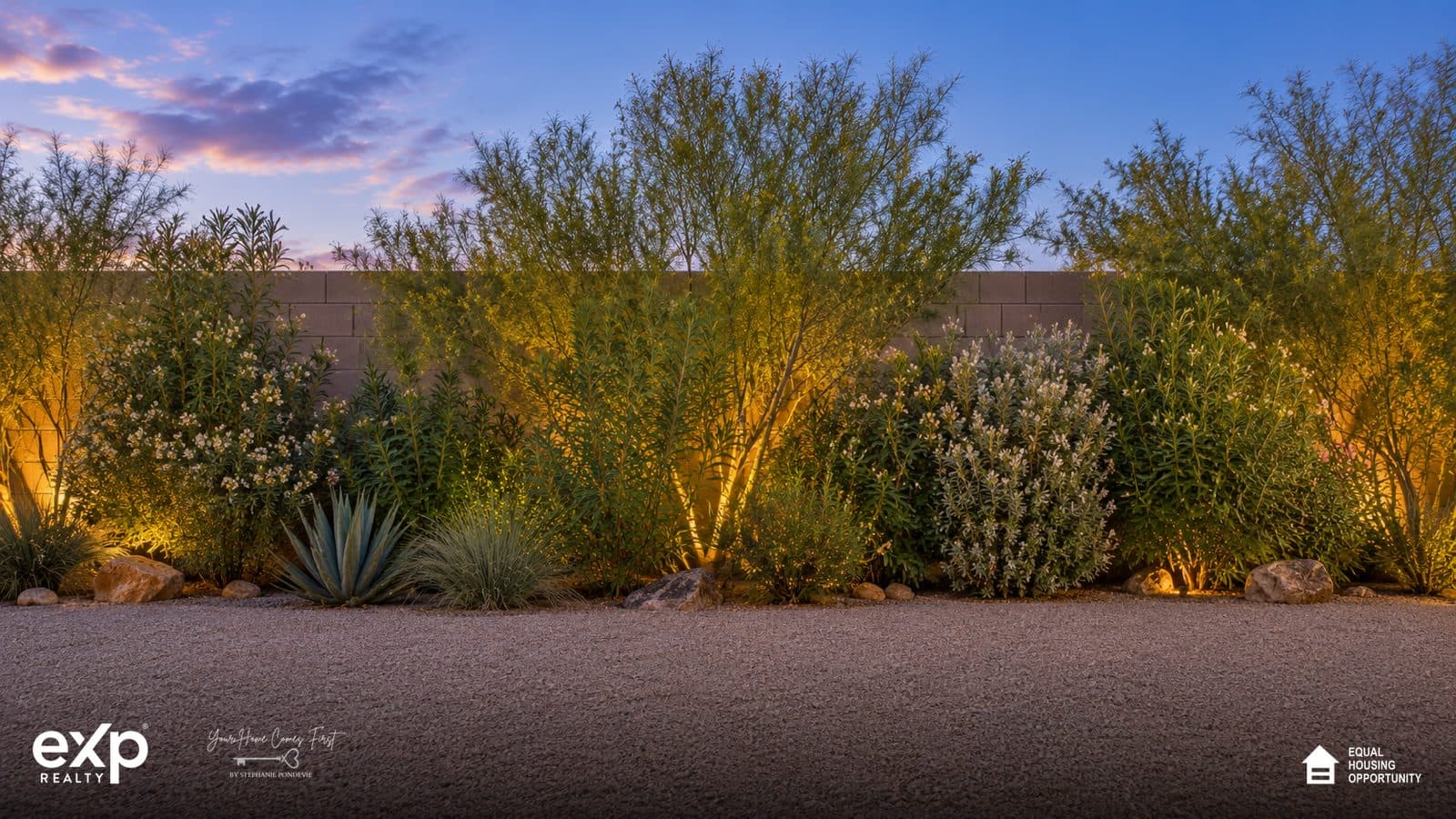
Landscaping as a visual and acoustic buffer. Dense planting along the rear wall does not block much sound by itself, but it blocks the sight line, and perceived noise drops substantially when you cannot see the source. Oleander, hopseed, and other dense desert-appropriate screening are common in the East Valley for exactly this.
The wall itself. If the block wall is low, damaged, or has gaps, repairing or raising it where the HOA and the city allow is worth considering. Check the approval requirements first.
Water in the backyard. A fountain or water feature produces a sound that masks traffic effectively, and it is a relatively inexpensive addition.
Orient the outdoor living space away from the road. If the patio furniture and the shade structure currently face the wall, reposition so the usable space faces the house or a side yard.
Fix anything that compounds the impression. A tired backyard plus traffic noise reads as a worse lot than a well-finished backyard plus the same traffic noise.
How do you market it honestly and still well?
Lead with what the lot actually gives you. Perimeter lots are frequently larger, more private on the sides, with no neighbor directly behind, no second-story windows looking into your yard, and often better access. Those are real advantages and they are the reason some buyers prefer these lots.
Do not hide it in the photos. Shooting only toward the house and never toward the rear wall produces a buyer who feels misled on arrival, and a misled buyer does not write an offer. Show the yard as it is, well presented.
Disclose it. Arizona sellers complete a Seller Property Disclosure Statement, and a known condition like this belongs in it. Beyond the requirement, disclosure handled upfront is far cheaper than a renegotiation during the inspection period.
Say what you did about it. New windows, a repaired wall, mature screening, a water feature. A buyer who hears that the condition was addressed deliberately responds differently from one who discovers it unaddressed.
Target the buyers for whom it is a trade. Buyers who want a larger lot, no rear neighbor, easy access to a main route, or a lower entry price into a community they otherwise could not afford. That last one matters in Gilbert, where the September median sale price was $578,000 and the $550,000 to $749,000 band carried 78 of the city's 227 sales. A perimeter lot is often how a buyer gets into a community at the bottom of its range rather than the middle.
Time the showings sensibly. Not to hide the traffic, which would be both dishonest and futile, but there is no reason to schedule an open house for the peak of the afternoon commute.
What are you actually weighing on price?
Three options, and the arithmetic usually favors the first.
Price it correctly from the start, reflecting the paired-sale evidence. Shortest market time, cleanest negotiation, and you keep the buyers who are genuinely looking for this kind of lot.
Price it as an interior lot and reduce later. This is the common mistake. The home gets showings, buyers walk out the back and decline, and the listing accumulates days. Gilbert's September sale-to-original-list-price ratio was 95.8 percent and homes that sold went under contract in a median of 48 days. A perimeter lot priced as an interior lot tends to exceed both of those figures and end up lower than the correct starting price would have been.
Spend on mitigation first, then price closer to the interior comps. Worth considering when the fix is specific and visible, such as windows and screening. It only works if you can show the buyer what changed.
What would you actually tell a seller with this lot?
Here is what I'd do if this were my house. I would go find the paired sales before I had any opinion about my price, because the discount in my community is a number somebody has already established and I would rather know it than argue with it.
Then I would spend money in the one place buyers actually complain about, which is sound coming through the windows, and I would plant the rear line so you cannot see the traffic. Those two things change the showing experience more than anything else on the list.
And I would market the lot's real advantages rather than pretend the road is not there. No rear neighbor, bigger yard, nobody looking into your backyard from a second story. Those are genuine, and the buyer who wants them exists.
Let's run your real numbers, not a guess. The paired sales will tell you what this costs. Priced to that number, this is a normal listing. Priced above it, it is a three-month listing.
What mistakes do Gilbert sellers make with these lots?
Pricing as though the condition does not exist, then spending two months discovering otherwise.
Photographing only toward the house, which produces buyers who feel misled when they walk out the back.
Leaving the condition off the disclosure and dealing with it during the inspection period instead.
Spending on cosmetic updates inside while leaving single-pane windows on the road-facing side.
Guessing at the discount instead of finding paired sales in their own community.
Marketing the home as if the lot were interior rather than to the buyers who actively prefer a perimeter lot.
Leaving the rear sight line open, when blocking the view of the road is the cheapest way to reduce perceived noise.
Positioning the outdoor living space facing the road rather than away from it.
The bottom line
A busy road is a priced condition, and the market in your own community has already set the number. Find it with paired sales, reduce what you can with windows, screening, wall repair, and water sound, show the lot honestly, disclose the condition, and market to the buyers who want a bigger yard and no rear neighbor.
With Gilbert at 953 active listings, 3.54 months of supply, and sellers closing around 95.8 percent of original list as of September 2026, buyers have choices. Pricing to the evidence from day one is what keeps a perimeter lot from becoming a long listing.
Frequently asked questions
How much less is a home on a busy road worth?
It depends entirely on the road, the buffering, and the community, so the only reliable answer comes from paired sales: comparing closed sales on perimeter lots against similar homes on interior lots in your own neighborhood over the last year or so. A walled collector street and an unbuffered arterial are very different conditions.
Do I have to disclose that my home backs a busy road?
Arizona sellers complete a property disclosure statement, and a known condition affecting the property belongs in it. Beyond the requirement, disclosing it upfront is practically cheaper than having it become a renegotiation point during the buyer's inspection period.
What is the best way to reduce road noise before selling?
The highest-impact item is usually the windows on the road-facing side, because that is where the sound actually enters and it is what buyers comment on. After that, dense screening planting along the rear wall to block the sight line, repairing or raising the wall where permitted, and a water feature to mask the sound.