2026-11-16 · 7 min read · Chandler
Should You Sell Your Chandler Home Vacant or Lived-In?
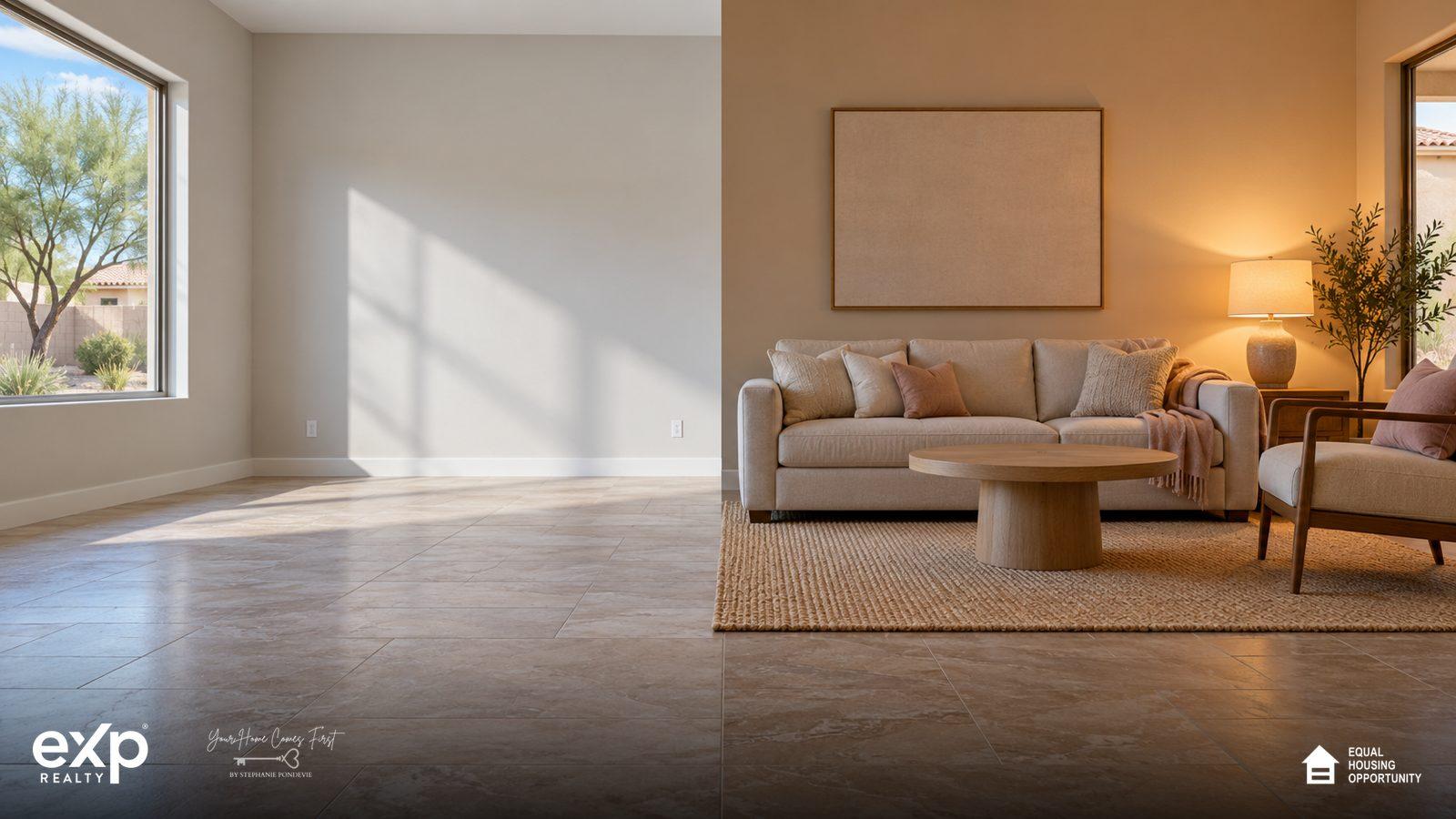
Which one sells better?
Neither one wins every time. A vacant home is easier to show, easier to photograph cleanly, and easier for inspectors and appraisers to access. A lived-in home usually feels warmer and helps buyers picture daily life in it, and for a move-up family it avoids a second move or a second mortgage payment.
The better question is which version of your home will show best, and what each option costs you. A lived-in home that is cluttered and hard to schedule can sell worse than a clean vacant one. A vacant home with bare walls, echoing rooms and every scuff visible can sell worse than a well-kept lived-in one.
So the decision comes down to four things: how the home will look, how flexible showings will be, what it costs to carry, and how the choice fits the timing of your next purchase.
Stephanie Pondevie is a Realtor in Chandler, Arizona, helping move-up families sell their current home and buy the next one as one coordinated plan.
What does the Chandler market say about the stakes?
Chandler is the tightest of the three core East Valley cities. As of October 2026, it had 3.27 months of supply, and homes that sold went under contract in a median of 39 days, according to ARMLS. Sellers received a median of 95.7% of their original list price.
That is a market where a well-prepared, well-priced home can sell in a reasonable time, and where presentation still separates the homes that sell close to their original price from the ones that do not. Whether you stay or go, the home has to show well from the first weekend.
What are the advantages of selling vacant?
Unlimited showing access. Buyers can see the home whenever their agent can book it. No missed showings because the family is home for dinner.
Cleaner photos and video. Empty rooms are easy to photograph, and staged rooms can look excellent.
No daily upkeep. You are not cleaning the kitchen every morning before work.
Easier repairs and prep. Painters, flooring installers and cleaners can work without moving your things around.
Simpler inspections and appraisals. Access is easy and nobody has to leave the house.
What are the drawbacks of selling vacant?
Carrying costs. If you have already moved into the next home, you may be paying two mortgages, two sets of utilities, two insurance policies, and HOA dues on both until the sale closes.
The home can feel smaller or colder. Empty rooms are hard to scale. Buyers may not be able to tell whether a king bed fits.
Flaws are more visible. Nail holes, worn carpet paths, and uneven paint show more without furniture.
Insurance terms can change. Some homeowners policies limit coverage when a home is unoccupied beyond a certain period. Talk to your insurance agent before you move out.
It needs looking after. Someone has to check the home, keep the yard maintained, keep utilities on for showings and inspections, and watch for leaks.
What are the advantages and drawbacks of selling lived-in?
The advantages are mostly about money and logistics. You avoid paying for two homes, you move once, and furniture shows scale and use. Lived-in homes with tidy, light furnishing often feel more inviting than empty ones.
The drawbacks are about effort and access. You have to keep the home show-ready, sometimes on short notice. You have to leave for every showing, with pets and kids and schedules to manage. Personal items, crowded rooms, and strong smells can distract buyers. And limited showing windows mean some buyers simply will not see the home.
What does a realistic scenario look like?
Here is a hypothetical. A Chandler move-up family has found their next home and has a choice: buy it first and sell their current home vacant, or sell first while living in it and use a short rent-back.
If they buy first, they move once, then prepare the empty house properly: paint, a deep clean, carpet replacement in two bedrooms, and light staging in the main living areas. Showings are easy and the photos are excellent. The cost is carrying both homes for however long the sale takes, plus the staging.
If they sell lived-in, they edit the furniture down, store about a third of their belongings, and commit to a showing schedule. They avoid the double carrying cost and the second move. The cost is the daily work of keeping the home ready and the possibility of missed showings.
For this family, the numbers decide it. With their equity and income, carrying two homes for two months is manageable, and the prep is easier with the home empty. They choose to buy first and sell vacant with partial staging. A family with less cushion might choose the opposite, and be right to.
What would you actually do?
Here's what I'd do if this were my house. I would price out both versions before deciding, on paper: the monthly cost of carrying an empty home for a realistic number of weeks, the cost of staging it, and against that, the cost of storage, the hours of keeping it show-ready, and the risk of missed showings if we stay. Then I would pick the version that shows best for the money, not the one that sounds easiest.
And I would not move out without calling my insurance agent first. That is the step sellers skip most often.
How do you prepare each option, step by step?
If you sell vacant
1. Call your insurance agent about coverage for an unoccupied home. 2. Keep the utilities on, including water, electricity and gas, for showings, inspections and the appraisal. 3. Set the thermostat to a reasonable setting so the home is comfortable when buyers arrive. 4. Do the repairs and paint while the home is empty. 5. Stage the key rooms. Living room, kitchen, primary bedroom at minimum. 6. Arrange regular checks for leaks, deliveries, yard care and anything unusual. 7. Remove clutter from the garage and outdoor areas too.
If you sell lived-in
1. Remove a third of what is in each room. Store it or donate it. 2. Clear counters, closets and the garage. Buyers open everything. 3. Pack personal photos and collections. 4. Set a daily reset routine. Ten minutes each morning beats a panic clean. 5. Plan for pets during showings. 6. Agree on showing windows with your agent that are as wide as you can manage. 7. Address odors before photos, not after.
What mistakes do Chandler sellers make with this choice?
Moving out and leaving the home empty and unstaged. Bare rooms show every flaw.
Turning off utilities. Inspectors and appraisers need them, and buyers notice a hot house.
Not checking insurance coverage before leaving the home unoccupied.
Staying, but refusing showings. A lived-in home with very limited access loses buyers.
Underestimating carrying costs. Two homes for three months is a real number. Write it down.
Leaving half the furniture. A half-empty home often looks worse than either fully furnished or properly staged.
Deciding without the timing of the next purchase in mind. Vacant or lived-in is really a question about the sequence of the whole move.
The bottom line
Selling your Chandler home vacant gives you easier showings, cleaner photos and simpler prep, at the cost of carrying the home and making it feel lived-in through staging. Selling lived-in saves the carrying cost and the second move, at the cost of daily upkeep and less flexible access. Either can sell well. The right choice is the one that shows best for your budget and fits the timing of your next home.
With Chandler at a 39-day median time to contract and 95.7% of original list price as of October 2026 according to ARMLS, a well-presented home in either condition is in a good position. A poorly presented one is not.
Stephanie Pondevie is a Realtor in Chandler, Arizona, helping move-up families sell their current home and buy the next one as one coordinated plan. If you are weighing vacant against lived-in and want to see the real numbers side by side, start at https://yourhomecomesfirst.com/opt-in or contact Stephanie at (480) 264-0075.
Frequently asked questions
Do vacant homes sell for less in Chandler?
Not necessarily. A clean, well-staged vacant home can show very well. An empty, unstaged home with visible wear can feel smaller and colder, which may affect how buyers value it. Presentation matters more than whether someone lives there.
Should I stage a vacant home?
Staging the main rooms, usually the living area, kitchen and primary bedroom, helps buyers understand scale and use. Full staging is not always necessary. Compare the cost with the price range and the competing homes your agent identifies.
Does my insurance change if I move out before selling?
It might. Some homeowners policies limit coverage when a home is unoccupied beyond a certain period. Talk to your insurance agent before you move out so you know what is covered and whether you need a different policy.
Suggested internal links
- Home Staging Tips in Maricopa County, AZ
- What Does It Cost to Get a Chandler Home Market-Ready?
- Can You Stay in Your Chandler Home After Closing? How a Rent-Back Works
- Should You Sell Your Gilbert Home Before Buying the Next One, or Buy First?
- What Do You Do With Pets During Showings of Your Gilbert Home?