2026-10-08 · 7 min read · Chandler
What Does It Actually Cost to Get a Chandler Home Market-Ready?
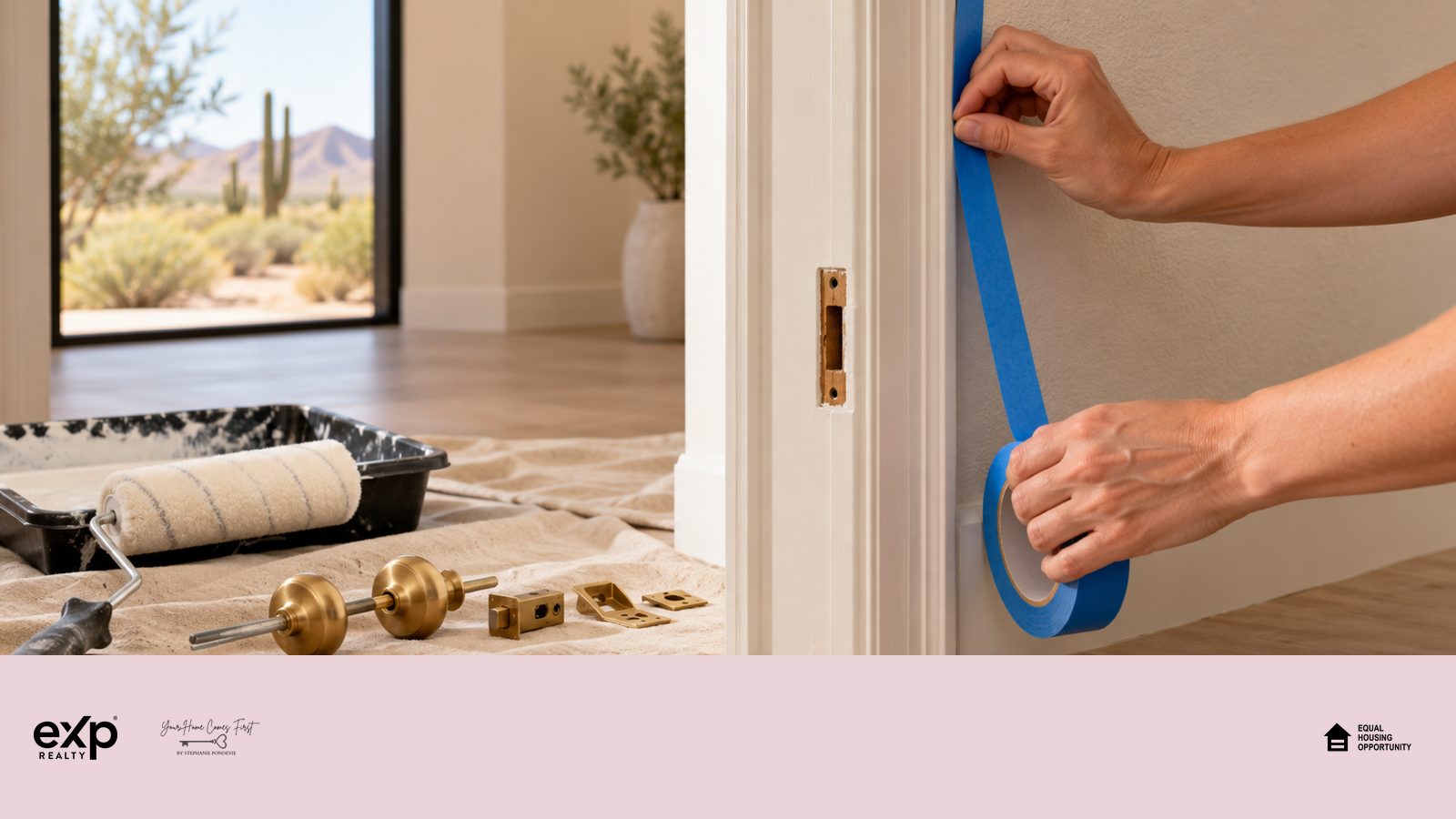
What is the direct answer?
Most Chandler sellers need three tiers of spending, and only the first two reliably pay for themselves. Tier one is cleaning, decluttering, and the front approach. Tier two is paint, light fixtures, landscaping cleanup, and small repairs. Tier three is the big-ticket item, a kitchen, a roof, a pool resurface, and that one is a judgment call that depends on your price band and your competition, not a default.
The reason the tiers matter is that the market sets a ceiling on what preparation can earn back. As of September 2026, Chandler's median sale price was $524,950, essentially flat year over year at down 0.95 percent, and sellers closed at an average of 96.0 percent of their original list price, according to ARMLS. In a flat-price market, preparation protects your price. It rarely creates a new one.
Stephanie Pondevie is a Realtor in Chandler, Arizona, helping move-up families sell their current home and buy the next one as one coordinated plan.
Tier one: the spending that always earns its money back
This is the list every Chandler seller should do, in every price band, in every market condition.
**A deep clean, including windows, baseboards, grout, and inside the appliances.** This is the single highest-return dollar in the whole process, because it affects the first ninety seconds of every showing and it photographs well.
**Decluttering and off-site storage for a month or two.** Not a closet shuffle. Physically removing things from the house so rooms read at their actual size. A storage unit for sixty days costs less than almost anything else on this list and changes how every photo looks.
**The front approach.** Pressure-wash the driveway and walkway, clean the front door and hardware, replace a faded house number, fresh gravel or rock if the yard has thinned, and trim anything blocking the path. Buyers form a price opinion standing at the front door, before they see a single room.
**Burned-out bulbs, and matching bulb temperature throughout.** A room with three different color temperatures looks worse than it is, and nobody can say why.
**Odor.** Pets, smoke, a house that has been closed up through an Arizona summer. Fix it, and have someone who does not live there confirm it is fixed.
Tier one is mostly labor and a weekend or two. It is not optional.
Tier two: the spending that usually earns its money back
**Interior paint, in a neutral.** The highest-return cosmetic item after cleaning, particularly if your walls carry a bold color or visible wear. Full-house paint is a real cost. Partial paint in the rooms that need it is often enough.
**Light fixtures and ceiling fans that date the house.** Swapping a handful of fixtures is inexpensive and removes a signal buyers read as "this house has not been updated."
**Cabinet and door hardware.** Cheap, fast, and disproportionately effective in a dated kitchen you are not going to remodel.
**Landscaping cleanup, not landscaping redesign.** Trim the palo verde and mesquite, pull dead plants, refresh the rock, fix the drip irrigation so nothing in the yard is visibly dying. Replacing a working desert yard with a new design rarely returns the money.
**Caulk, grout, and visible plumbing drips.** These are small items that buyers read as deferred maintenance.
**Minor drywall and trim repairs.** Patch and paint the places where furniture, doors, and life have left marks.
**Carpet cleaning, or replacement if it is genuinely worn.** Clean first and see. Replacing carpet that only needed cleaning is one of the most common overspends.
Tier two is where most of a reasonable preparation budget lives, and it is where the price protection actually happens.
Tier three: the big-ticket decisions that are genuinely optional
These are the ones to decide with your agent rather than by default, because the answer changes with your price band and what else is on the market.
**The roof.** If it is at or past the end of its service life, a buyer's lender or insurer may force the issue anyway, and a roof that visibly fails is the single fastest way to lose a buyer at the door. If it has real remaining life, documentation and a recent inspection report often serve you better than replacement.
**The AC.** In Chandler, an aging AC is a known buyer concern. A service record and a recent tune-up go a long way. Full replacement is a large check that buyers tend to discount rather than reward, unless the unit has actually failed.
**Kitchen and primary bathroom.** A full remodel immediately before selling rarely returns its cost, because you pay retail for choices the buyer may not have made. The exception is a kitchen so dated that it keeps your home out of its price band entirely. That is a pricing decision, not a design decision.
**Pool resurfacing or equipment.** A pool in visibly poor condition reads as a liability. A functioning pool with recent service records reads as an amenity. Resurfacing is expensive and the return depends heavily on your competition.
**Windows.** Rarely worth it immediately before a sale. Buyers notice single-pane windows but do not pay for new ones.
How do you decide what is worth doing in your specific case?
Three questions settle most of it.
**What are the homes you are competing against actually offering?** Pull the recent sales in your community and price band, look at their photos, and find the gap between them and your house. Spend to close that gap, not to exceed it. Chandler's move-up bands carried most of the September volume, with 52 of 194 sales in the $400,000 to $499,000 range and 48 in the $550,000 to $749,000 range. Those are deep, competitive brackets where presentation separates homes.
**Does this item cause a buyer to walk, or just to notice?** Items that cause a walk get fixed. Items that only get noticed usually get priced instead.
**Will a lender or insurer force the issue later?** Roof condition, major systems, and open permit problems can become closing problems. It is cheaper to resolve those on your schedule than during escrow with a deadline.
What would you actually tell a seller about this?
Here is what I'd do if this were my house. I would do all of tier one before I let a photographer in the door, because it is the cheapest and it affects everything else. Then I would walk the house with fresh eyes and pick the three or four tier-two items that close the gap against the homes I am actually competing with. And I would leave tier three alone unless the item is already failing or it is keeping the house out of its price band.
What I would not do is spend thirty thousand dollars on a kitchen in order to ask for twenty thousand more. In a market where Chandler prices are flat and sellers are closing around 96 percent of original list, preparation is there to keep you from giving up that 4 percent, not to invent a higher number.
What mistakes do Chandler sellers make with preparation?
Replacing instead of cleaning. Carpet, grout, and hardware are the usual victims.
Remodeling to their own taste right before selling, which pays retail for choices the buyer did not make.
Skipping the front approach because it is outside, when it is the first thing every buyer sees.
Doing tier three and skipping tier one, which is the most expensive possible order.
Starting the work after the home is already listed, so the first weeks of market time are spent showing an unfinished house.
Not photographing the house again after real improvements, so the listing still shows the before version.
The bottom line
Getting a Chandler home market-ready is a tiered decision, not a single budget. Tier one is non-negotiable and cheap. Tier two is where most sensible spending belongs. Tier three is a case-by-case call driven by whether the item is failing and whether it keeps you out of your price band.
With Chandler's median sale price at $524,950 and sellers closing at about 96.0 percent of original list as of September 2026, the realistic goal of preparation is protecting the price your comparable sales support. If you want a specific list for your house rather than a general one, that is a walkthrough and a comp review, and it is worth doing before you spend anything.
Frequently asked questions
Should I remodel my kitchen before selling my Chandler home?
Usually not. A full remodel immediately before listing rarely returns its cost, because you pay retail for finishes the buyer may not have chosen. The exception is a kitchen dated enough that it pushes your home below its price band, which makes it a pricing question rather than a design one.
Is a pre-listing inspection worth paying for?
It often is, because it lets you decide what to fix on your own schedule instead of under a deadline during escrow. It also changes what you are required to disclose, so talk through the disclosure implications with your agent before you order one.
How much should I budget to prepare a home for sale?
There is no single figure, because it depends on the home's condition and your price band. The useful approach is to budget all of tier one, pick the tier-two items that close the gap against your actual competition, and treat tier three as a separate decision rather than part of the same budget.