2026-11-20 · 7 min read · Gilbert
How Do You Protect Your Privacy and Valuables During Gilbert Showings?
The quick version
Protect your privacy during Gilbert showings by removing or locking away anything valuable, personal or sensitive before your home goes on the market, keeping showings controlled through a showing service and lockbox, being careful about what your listing photos reveal, and handling security cameras in a way that is disclosed and lawful. Most buyers and agents are respectful, but a home on the market has a lot of people walking through it, and preparation is far easier than recovery.
Cameras deserve special attention. Many sellers have video doorbells and indoor cameras, and that is generally fine for security. Recording audio of conversations you are not part of is a different matter, and the rules around it are something to check with an attorney rather than assume.
Stephanie Pondevie is a Realtor in Gilbert, Arizona, helping move-up families sell their current home and buy the next one as one coordinated plan.
Why does this matter more in Gilbert right now?
As of October 2026, Gilbert had 985 active listings and a median of 57 days on market, up from 50 a year earlier, according to ARMLS. Months of supply rose to 3.69, up 23.4% from a year earlier.
Longer time on market means more showings over a longer period. Your home may be open to buyers, their agents, inspectors, appraisers and contractors for weeks. That is the normal process of selling, and it is a good reason to set up your privacy and security plan once, at the start, rather than scrambling before each appointment.
What should you remove or lock away?
Start with a walkthrough of your own home as if you were a stranger seeing it for the first time.
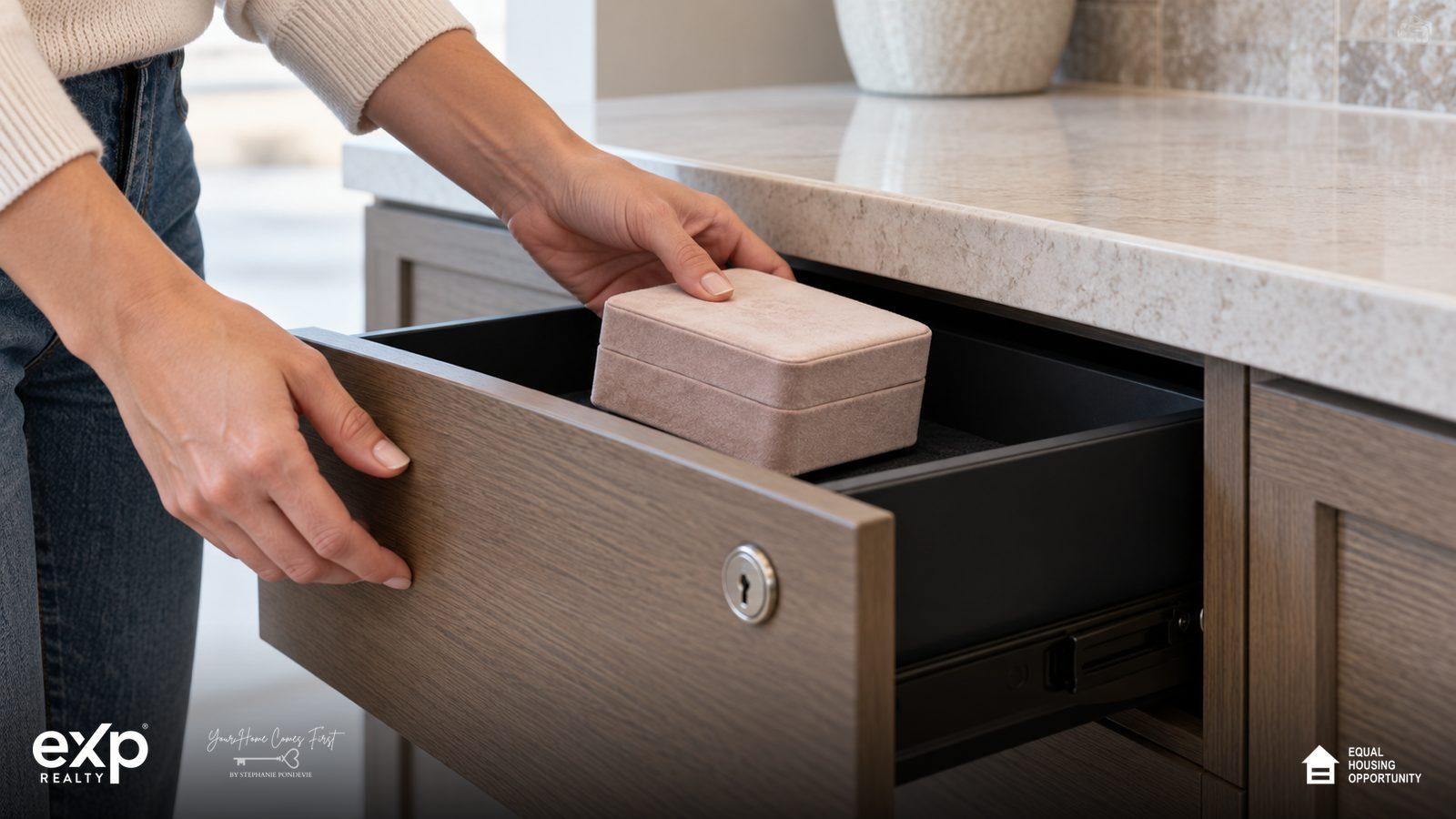
Valuables. Jewelry, cash, watches, collectibles and small electronics. Lock them in a safe or move them off-site.
Prescription medications. Medicine cabinets and nightstands get opened. Move prescriptions somewhere secure.
Firearms. Store them securely and out of sight, or off the property during the listing period.
Financial and personal documents. Bank statements, tax returns, mail, passports, birth certificates and anything with account numbers or your Social Security number.
Keys and garage remotes. Spare keys on hooks and garage remotes in cars or drawers are easy to pocket.
Personal photos and identifying information. Family photos, kids' names on walls, school schedules and calendars on the refrigerator. These are privacy issues as well as staging distractions.
Laptops and devices. Lock or remove them. Do not leave devices unlocked or passwords written down.
Anything with your home's security details. Alarm codes, Wi-Fi passwords on the fridge, and printed instructions for your security system.
What do your listing photos reveal?
Listing photos are public and widely shared. Look at them carefully before they go live.
- Security system details. Keypads, camera locations and sensors can be visible. Consider what a photo shows about how your home is protected.
- Valuables in the frame. Art, electronics and collections that are visible online advertise what is inside.
- Personal items. Photos, names, mail on the counter, and anything with identifying information.
- Window views and entry points. Generally fine, but worth a second look if a photo makes an access point obvious.
Your agent and photographer can stage and frame shots to show the home well without revealing details you would rather keep private. If a photo bothers you, say so before the listing launches.
How should you handle security cameras?
Cameras are common, and many sellers want to keep them running. A few principles help.
Disclosure. Many agents recommend letting buyers and their agents know cameras are present, through a note in the showing instructions or a visible sign. Ask your agent how they handle this in their listings.
Video versus audio. Video recording in your own home is generally treated differently from audio recording of conversations. Laws on recording conversations you are not part of can be strict. The safest approach is to ask an attorney about your specific setup, and consider turning off audio during the listing period.
Do not use what you overhear. If you do record and you hear a buyer's thoughts about your home, using that information in negotiation can create problems. Buyers and agents often assume conversations during showings are private.
Doorbell cameras. These are common and visible. They can help you know when showings start and end.
Indoor cameras in private spaces. Cameras in bathrooms or bedrooms raise obvious privacy concerns. Think carefully, and get advice.
How are showings controlled?
A well-managed listing gives you control without making it hard for buyers to see your home.
A showing service. Most listings use a scheduling system that logs who requested the showing, which agent attended, and when. You can usually set rules, such as advance notice requirements or blocked times.
A lockbox that records access. Electronic lockboxes typically log which licensed agent opened them. Ask your agent which system they use and what records it keeps.
Agent-accompanied showings. In most cases, a buyer's agent accompanies the buyer. Your showing instructions can make that a requirement.
Showing windows. Setting specific times for showings reduces surprise visits and makes it easier to prepare.
After-hours access. Decide whether you will allow evening or early morning showings.
Open houses. If you hold an open house, more people come through with less screening. Extra care with valuables and personal items is worth it.
What about pets, kids and your own schedule?
If you live in the home while it is listed, plan how you will leave for showings. Many sellers set a routine: a quick reset of the kitchen and bathrooms, valuables already secured, pets crated or taken along, and out the door. Having that routine makes short-notice showings manageable.
If you have pets, keep them away from showings when possible, and note any pets in the showing instructions so agents know what to expect.
A hypothetical seller's plan
A Gilbert move-up seller is preparing to list. Before the photographer arrives, they:
- Move jewelry, documents and prescriptions to a locked cabinet.
- Take down family photos and a calendar with family schedules.
- Remove the alarm code note from the pantry.
- Ask the photographer to avoid shots that show the alarm keypad and an indoor camera.
- Turn off audio on their indoor cameras and keep video on, after checking with an attorney about their setup.
- Add a note to the showing instructions that video cameras are present.
- Set showing windows that fit their family's routine and require at least an hour's notice.
They review the showing service log weekly with their agent, which also gives them a clear picture of activity.
What would make this easier on you?
Here's what I'd do if this were my house: set the privacy and security plan up once, before photos, and then stop thinking about it. Secure the valuables, pull the personal items, decide on cameras, and write the showing rules. A seller who has done that up front can say yes to a short-notice showing without stress, and saying yes to showings is part of selling well.
What mistakes do Gilbert sellers make with showing security?
Leaving prescriptions and spare keys in obvious places.
Approving listing photos without checking what they show about valuables or security.
Recording audio during showings without understanding the legal risk.
Using something overheard on a camera in negotiations.
Allowing unaccompanied showings or unclear showing instructions.
Treating open houses with the same preparation as a private showing.
Waiting until the first showing request to start securing items.
The bottom line
Protecting your privacy and valuables during Gilbert showings comes down to preparation: remove or lock away anything valuable or personal, review your listing photos, use a showing service and a lockbox that log access, and handle cameras in a way that is disclosed and lawful. Check with an attorney about audio recording.
With Gilbert's median days on market at 57 and 985 active listings as of October 2026, your home may be shown for weeks. Set up the plan once, at the start. If you are getting ready to list in Gilbert, start at https://yourhomecomesfirst.com/opt-in or contact Stephanie at (480) 264-0075.
Stephanie Pondevie is a Realtor in Gilbert, Arizona, helping move-up families sell their current home and buy the next one as one coordinated plan.
Frequently asked questions
Can I keep my security cameras on during showings?
Many sellers keep video cameras running, and disclosing that cameras are present is a common practice. Audio recording is a different issue. Laws on recording conversations can be strict, so ask an attorney about your setup and consider turning off audio while the home is listed.
Do I need to be home during showings?
Usually not, and buyers often feel more comfortable when sellers are away. Most showings are accompanied by the buyer's agent, and a showing service and electronic lockbox track access.
What should I do if something goes missing after a showing?
Contact your agent right away so they can check the showing service and lockbox records. If something was stolen, report it to the police. Prevention is easier, which is why securing valuables before listing matters.