2026-11-11 · 9 min read · Scottsdale
Is a Scottsdale View Lot Worth the Premium?
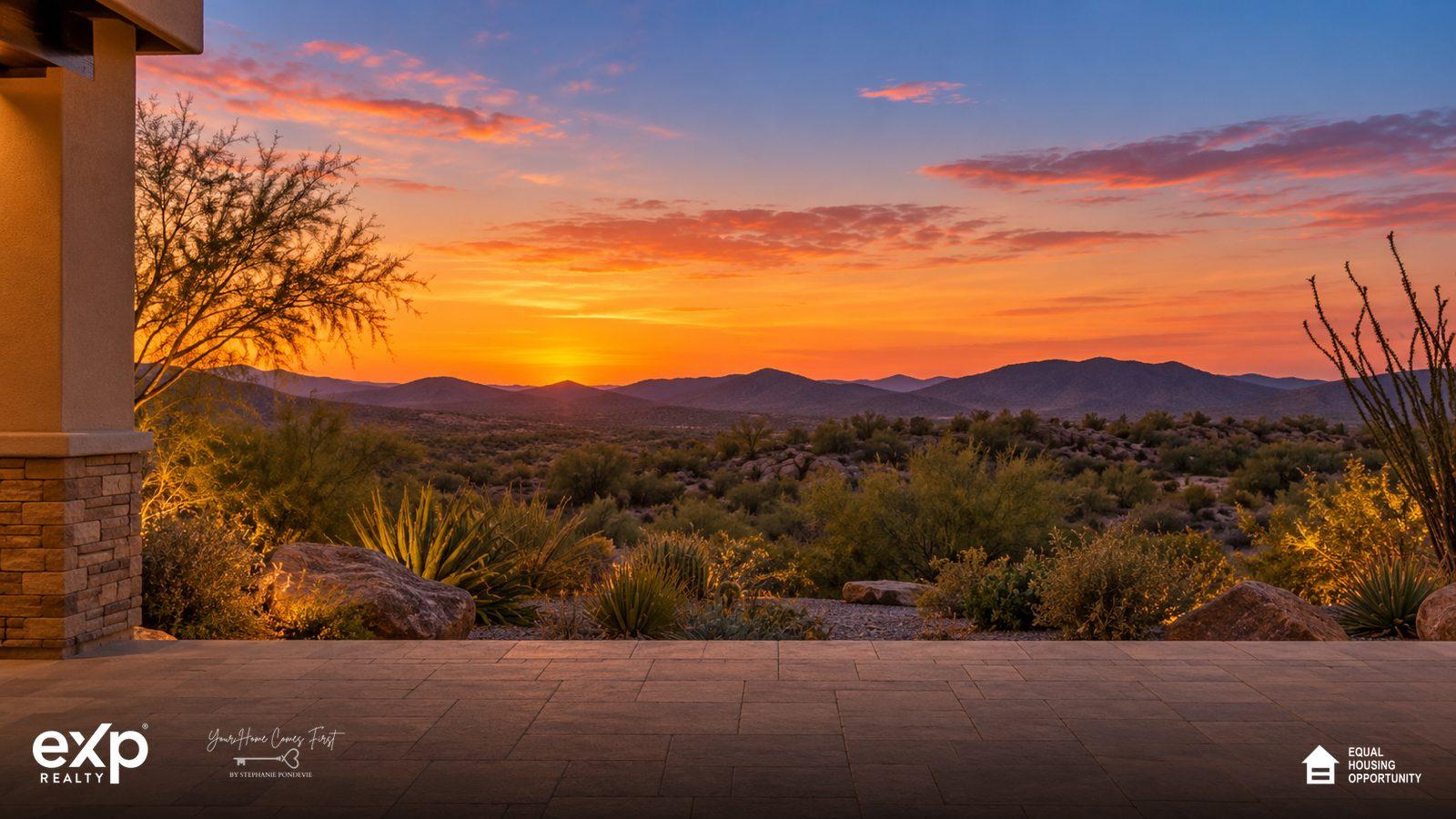
So, is it worth it?
Sometimes. A view lot in Scottsdale is worth the premium when three things are true: the view is protected or unlikely to change, the premium you pay is in line with what comparable view homes have actually sold for, and you will enjoy the view enough to justify the tradeoffs that often come with it, such as afternoon sun, slope, wind exposure or a longer drive.
It is not worth it when the premium is set by the listing price rather than by sales, when the view depends on a vacant parcel nobody has checked, or when the house itself is weaker than a non-view home at the same price.
A view is real value. It is also the easiest feature in Scottsdale to overpay for, because it is emotional and hard to measure.
Stephanie Pondevie is a Realtor in Scottsdale, Arizona, helping move-up families sell their current home and buy the next one as one coordinated plan.
What kind of views carry a premium in Scottsdale?
Not every view is priced the same way. In general, buyers and appraisers tend to separate them into a few types:
- Mountain views, whether toward the McDowells, Camelback or other ridgelines, depending on where in the city you are.
- City light views, usually from elevated lots in the northern part of the city or along hillsides.
- Golf course or open space views, which are as much about what is not behind you as what is in front of you.
- Sunset or open desert views from lots that back to preserved land or washes.
The same house can sell for very different prices depending on which of these it has, how much of the view is visible from inside the main living areas, and whether the view can be lost.
How does the current Scottsdale market affect what you pay?
Scottsdale is the one core East Valley city where prices are clearly rising right now. As of October 2026, the Scottsdale median sale price was $981,305, up 10.9% from a year earlier, and the year-to-date median was $952,900, up 7.5%, according to ARMLS. Supply sat at 4.58 months, with 2,553 active listings, and sellers received a median of 94.3% of their original list price.
Two readings matter for a view lot buyer.
First, rising prices make view premiums easy to stretch. A seller who sees the median climb may price the view generously on top of an already higher base.
Second, sellers are still giving ground from original list. A 94.3% sale-to-original-list ratio means many homes sell below where they started. That leaves room to negotiate a premium that was set by hope rather than by comparable sales.
How do you figure out what the view is actually worth?
You compare like with like. The goal is to isolate the view from everything else.
Find paired sales. Look for homes in the same community or nearby, similar in size, age and finish, where one had the view and one did not. The difference in sale price, adjusted for other differences, is the market's real view premium. Your agent should be able to pull these.
Look at sold, not listed. Active listings show what sellers want. Closed sales show what buyers paid.
Check how long view homes sat. If the view homes in a community took noticeably longer to sell, the premium may be running ahead of what buyers will pay.
Ask what the appraiser is likely to do. If you are financing, the appraisal has to support the price. Appraisers adjust for views using comparable sales, and if the comparables do not support the premium, you may be asked to bring the difference in cash. A loan officer can tell you how an appraisal gap would affect your purchase.
Separate the view from the lot. A larger, flatter or more private lot can be worth more on its own. Do not credit the view with value that belongs to lot size.
Can the view be taken away?
This is the most important question, and the one most often skipped.
A view is only as durable as whatever sits between you and it. Before you pay a premium, find out:
- What is on the land in front of the house. Is it preserved open space, a golf course, a wash, private property, or a vacant parcel?
- Who owns that land and what it is zoned for. A vacant lot below a hillside home can become a two-story house. Zoning and ownership are public record, and the City of Scottsdale can tell you what is permitted.
- Whether the HOA has height or view rules. Some communities restrict building heights or landscaping that blocks views. Others do not. Read the CC&Rs rather than assuming.
- Whether any view easement exists. These are uncommon. If a seller says the view is protected, ask to see the recorded document. A title officer can confirm what is recorded against the property and its neighbors.
- Whether trees or landscaping could grow into the view. A neighbor's palo verde can quietly erase a city light view over a few years.
- Whether hillside or desert land rules apply. Scottsdale has rules for building on environmentally sensitive land in parts of the city. Whether and how they affect a neighboring parcel is a question for the City.
If the answers are uncertain, price the view as uncertain.
What tradeoffs come with a view lot?
Views in Scottsdale often come with conditions that affect daily life and cost.
Orientation and heat. Many of the best views face west or south. In Arizona that can mean strong afternoon sun on the glass that frames the view. Ask about window specifications, shading, and recent summer utility bills.
Slope and drainage. Hillside lots may have retaining walls, steeper driveways and drainage features that need maintenance. An inspector can evaluate visible conditions, and a specialist may be worth hiring for significant retaining walls.
Wind and exposure. Elevated lots can be windier, which affects patio use and outdoor furniture.
Privacy. A lot that looks out can also be looked at.
Access. Some view lots sit farther from main roads. Drive the route at the times you would actually use it.
None of these is a reason to skip a view lot. Each is a reason to see it clearly before you pay for it.
How would you approach this as a buyer?
Let's run your real numbers, not a guess. A view premium is just a number, and it can be tested.
If I were helping a buyer decide, I would want to see three things side by side: the paired sales that show what the view has actually been worth in that area, the public record on the land in front of the home, and a monthly cost comparison that includes any difference in cooling and maintenance. Then the question becomes simple: is the view worth that specific amount to you, knowing what it costs and how secure it is?
For a move-up buyer, there is one more layer. The premium you pay on the next home comes partly from the equity in your current one. Paying an extra amount for a view changes your down payment, your loan size or your reserves. That tradeoff should be visible before you write the offer, not after.
A realistic scenario
Consider a hypothetical. A buyer is choosing between two homes in the same part of north Scottsdale. Both are similar in size and age. One has an unobstructed mountain view and is listed noticeably higher. The other backs to a neighbor's wall.
The paired sales in the area show view homes have sold for more, but by less than the listing gap. The land in front of the view home turns out to be a privately owned vacant parcel. The view home faces west and has older windows.
The buyer can still choose the view home. With that information, though, a reasonable offer would reflect the paired-sale premium rather than the listing premium, would account for window upgrades in the budget, and would come with a clear understanding that the view could change if the parcel is built on. That is a very different decision from paying the full asking premium on a feeling.
What mistakes do buyers make with view lots?
Paying the listing premium instead of the market premium. The seller's number is a starting point.
Assuming a vacant lot will stay vacant. Check ownership and zoning.
Taking "protected view" on someone's word. Ask for the recorded document.
Ignoring orientation. A beautiful west-facing view can come with summer cooling costs.
Visiting only once. See the view in the morning, at sunset, and at night if city lights are part of the appeal.
Forgetting resale. The next buyer will ask the same questions. A view you cannot document as durable may not hold its premium when you sell.
Letting the view hide the house. Inspect the home on its own merits. A great view on a house with a tired roof or aging systems is still a house with a tired roof.
Step by step: evaluating a Scottsdale view lot
1. Ask your agent for paired sales with and without the view in that area. 2. Compare closed prices, not list prices, and note days on market. 3. Look up the ownership and zoning of the land in front of the view. 4. Read the HOA's CC&Rs for height, landscaping and view provisions. 5. Ask the title officer what is recorded, including any view easement. 6. Visit at different times of day. 7. Review window specs, orientation and recent utility costs. 8. Have the home inspected, with a specialist for major retaining walls if present. 9. Talk to your loan officer about how an appraisal gap would be handled. 10. Write an offer based on the evidence, not the listing premium.
The bottom line
A Scottsdale view lot can be worth the premium, and the views here are a real reason people choose the city. The premium is worth it when it matches what comparable view homes have sold for, when the view is unlikely to change, and when you understand the costs that come with it. With Scottsdale's median at $981,305 in October 2026 and sellers still receiving 94.3% of original list on average, there is often room between what a view is listed at and what it is worth.
If you are weighing a view home as your next move, start at https://yourhomecomesfirst.com/opt-in or contact Stephanie at (480) 264-0075. Stephanie Pondevie is a Realtor in Scottsdale, Arizona, helping move-up families sell their current home and buy the next one as one coordinated plan.
Frequently asked questions
Do appraisers give credit for a view in Scottsdale?
Appraisers can adjust for views when comparable sales support it. If the comparables do not support the premium in the contract price, the appraisal may come in below the price. Ask your loan officer how that would affect your loan and cash to close.
How do I know if a Scottsdale view is protected?
Check what sits between the home and the view, who owns it, and how it is zoned. Review the HOA's CC&Rs and ask the title officer whether any view easement is recorded. Without documentation, treat the view as something that could change.
Are view homes harder to resell?
Not necessarily. A well-documented, durable view often helps resale. A view that depends on an empty lot, or a premium well above what the market paid, can be harder to recover when you sell.
Suggested internal links
- What Should You Know Before Buying a Scottsdale Home on a Golf Course?
- What Actually Adds Resale Value to a Scottsdale Home, and What Doesn't?
- What Should You Check About a Home's Roof and AC Before Buying in Scottsdale?
- How Does an Appraisal Gap Guarantee Work in Maricopa County, AZ?
- What Is the Difference Between North and South Scottsdale for a Buyer?