2026-11-15 · 8 min read · Gilbert
How Do Gift Funds for a Down Payment Work on a Gilbert Home?
What is the direct answer?
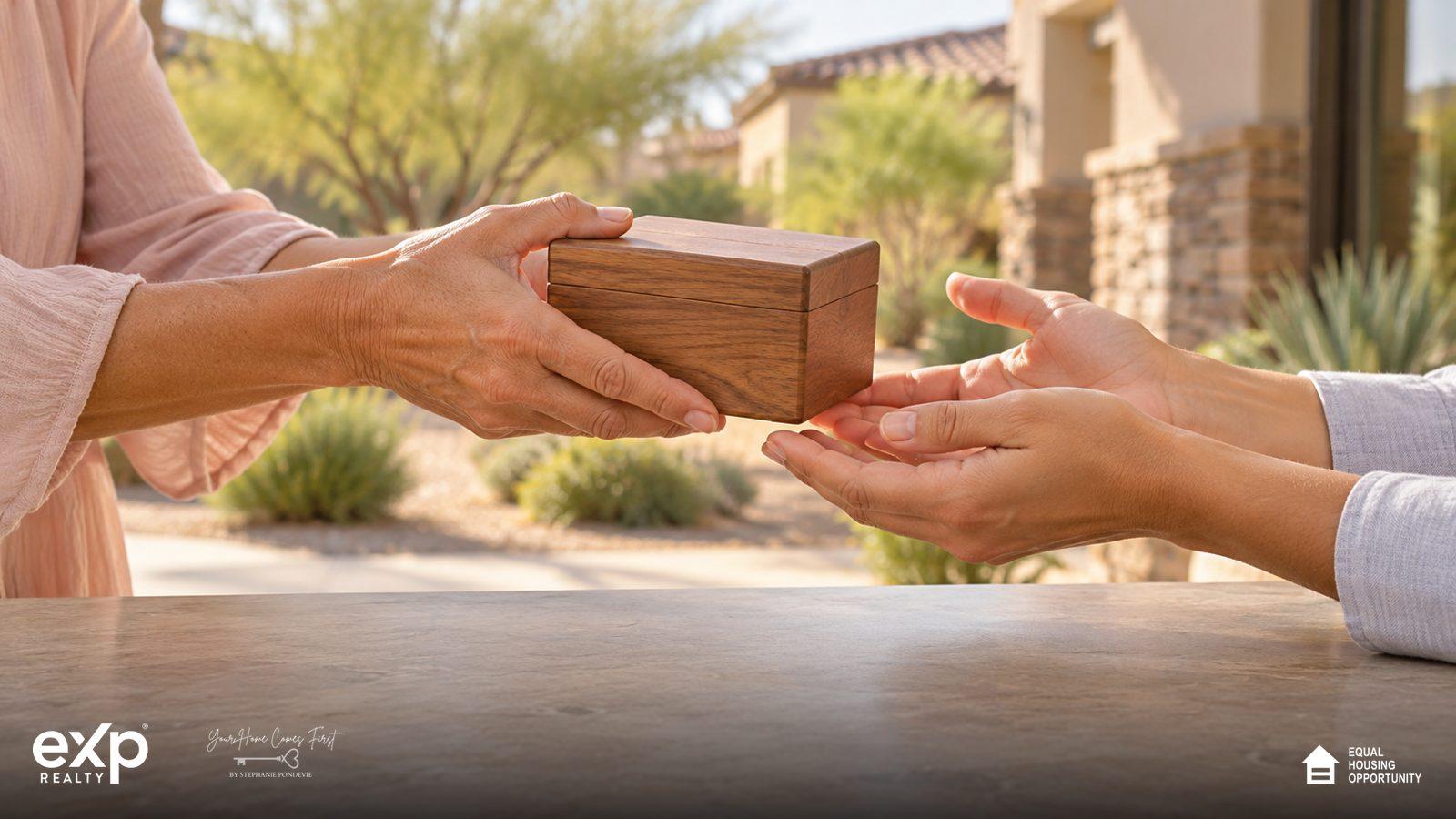
A gift for a down payment is money someone gives you toward your purchase with no expectation of repayment. Lenders allow it on many loan types, but they do not simply take your word for it. They want to know who gave the money, that it truly is a gift and not a loan in disguise, and that it came from the giver's own funds.
In practice, that means three things: a signed gift letter, documentation showing the money leaving the giver's account, and documentation showing it arriving in yours or at escrow. Get those three right, early, and gift funds are routine. Get them wrong, or move the money at the wrong time, and they can delay a closing or force you to explain a deposit you thought was obvious.
The specifics, including who is allowed to give, how much of the down payment can be gifted, and whether you need to contribute some of your own funds, depend on your loan program. Your loan officer is the one who confirms those rules for your file.
Stephanie Pondevie is a Realtor in Gilbert, Arizona, helping move-up families sell their current home and buy the next one as one coordinated plan.
Why does this come up so often in Gilbert?
Because the numbers are meaningful. As of October 2026, Gilbert's median sale price was $599,500, up 5.2% from a year earlier, according to ARMLS. On a home at that level, even a modest down payment is a significant amount of cash, and help from a parent or other relative is a common way buyers close the gap.
It also comes up with move-up buyers in a specific way. A family buying their next Gilbert home before the current one sells may be short on cash for a few weeks. A relative offering to help with the down payment can make a non-contingent offer possible. That is a gift scenario, and the same paperwork applies, along with one more question: is it really a gift, or will you pay it back when your sale closes? That answer matters to the lender, and it has to be truthful.
What does a lender actually need to see?
Rules vary by loan type and lender, but most gift documentation follows the same shape.
The gift letter
A signed statement from the person giving the money. It typically includes:
- The giver's name, contact information and relationship to you
- The dollar amount of the gift
- The address of the property being purchased
- A clear statement that the money is a gift and does not need to be repaid
- The giver's signature, and often yours
Many lenders have their own gift letter template. Use theirs rather than writing your own, because it already contains the language their underwriters expect.
Proof the money came from the giver
Lenders usually want to see that the giver had the funds and that the money came from their account. That might be a bank statement showing the balance and the withdrawal, a copy of the check, or wire confirmation. The goal is to rule out the gift being borrowed money, which would change how your debt is calculated.
Proof the money reached you or escrow
If the money is deposited into your account, the lender will typically want to see the deposit on your statement and match it to the giver's withdrawal. If it is wired directly to the title company holding escrow, the wire confirmation does the same job.
When should the gift money actually move?
This is the question that trips people up, and the right answer depends on your lender. Ask before anyone transfers anything.
Some lenders prefer the gift to be deposited into the buyer's account early, so it appears on statements before underwriting. Others are comfortable with the giver wiring funds directly to escrow close to closing. Either can work. What causes trouble is money arriving with no plan: a large, unexplained deposit in the middle of underwriting, a gift split into several transfers from different accounts, or cash deposited with no paper trail.
Cash is the hardest to document. If a relative wants to help, a bank transfer, check, or wire is far easier for a lender to verify than an envelope of bills.
What does a realistic scenario look like?
Here is a hypothetical. A couple is buying a Gilbert home and has most of their down payment saved. A parent offers to contribute the rest. The couple tells their loan officer at the pre-approval stage, before they have an accepted offer.
The loan officer confirms their program allows a gift from a parent, explains whether the couple needs to put in any of their own funds, and sends the lender's gift letter template. The parent fills it out once an address is known. The loan officer asks for the parent's recent bank statement and tells the family to wire the gift directly to the title company a few days before closing.
When the offer is accepted, the gift is already part of the plan. Underwriting sees the letter, the parent's statement, and the wire. Nothing surprises anyone.
Compare that with the version where the parent deposits money into the couple's account two weeks into escrow without telling anyone. Underwriting sees a large deposit it cannot explain, asks for documentation, and the couple has to scramble for a letter and statements while the closing date gets closer. Same gift, very different experience.
How should you handle gift funds, step by step?
1. Tell your loan officer at the start. Mention the gift during pre-approval, not after you are under contract. 2. Confirm the program rules. Ask who can give, whether there is a limit on how much can be gifted, and whether you need a minimum contribution of your own. 3. Get the lender's gift letter template. Use their form, not one from the internet. 4. Ask how and when the money should move. Deposit to you, or wire to escrow, and on what timeline. 5. Ask the giver for their documentation early. Recent statements showing the funds, and a plan for the transfer. 6. Avoid cash and avoid splitting. One documented transfer from one account is simplest. 7. Keep it truthful. If the money is a loan, say so. A loan affects your debt picture and has to be treated differently. 8. Point the giver to a tax professional. Large gifts can carry federal gift tax reporting questions for the person giving. That is a conversation for their CPA, not your lender or your agent.
What would you want to know before you write an offer?
Let's run your real numbers, not a guess. Before an offer goes out on a Gilbert home, I want to know exactly how much cash you are bringing, where every dollar is coming from, and whether your lender has already signed off on the gift. A buyer who says "my parents are helping" and has a letter template already in hand writes a cleaner offer than one who plans to figure it out during escrow.
For move-up buyers, I also want to know how the gift fits with the sale of your current home. If the gift is really bridge money you plan to return when your sale closes, that is a different conversation with your lender, and it is far better to have it before the contract than in the middle of underwriting.
What mistakes do Gilbert buyers make with gift funds?
Waiting to mention it. The lender finds out anyway, later, when it is harder to document.
Moving money without a plan. Unexplained deposits during underwriting cause delays.
Using cash. It is the hardest form of gift to verify.
Treating a loan as a gift. If you have agreed to pay it back, it is not a gift, and saying otherwise creates a problem with your loan.
Using a generic gift letter. Lender templates exist for a reason.
Assuming every program treats gifts the same way. Rules differ between loan types, and your loan officer is the one who confirms yours.
Forgetting the giver's side. The person giving may have tax reporting questions of their own. They should ask their CPA.
The bottom line
Gift funds are a normal, accepted way to cover part of a down payment on a Gilbert home. The work is in the paper trail: a signed gift letter on the lender's form, proof the money came from the giver, and proof it reached you or escrow, moved on a timeline your lender has approved.
With Gilbert's median sale price at $599,500 as of October 2026 according to ARMLS, family help can make a real difference in what you can offer. Plan it at the pre-approval stage, document it the way your lender asks, and it becomes one of the least stressful parts of the purchase.
Stephanie Pondevie is a Realtor in Gilbert, Arizona, helping move-up families sell their current home and buy the next one as one coordinated plan. If you are buying in Gilbert and family help is part of your plan, Stephanie can help you line it up with your lender before you write an offer. Start at https://yourhomecomesfirst.com/opt-in or contact Stephanie at (480) 264-0075.
Frequently asked questions
Who is allowed to give me gift funds for a down payment?
It depends on your loan program. Many programs allow gifts from relatives, and some allow other donors with a documented relationship. Your loan officer will confirm who qualifies for your specific loan before any money moves.
Do I need a gift letter if the money goes straight to escrow?
Usually, yes. Most lenders still require a signed gift letter confirming the money is a gift and does not need to be repaid, plus documentation of the transfer. Ask your lender for their template and their preferred way to receive the funds.
Does the person giving me money owe taxes on the gift?
That depends on the amount and their own situation, and it is a question for their CPA or tax professional. Your lender and your agent cannot advise on the giver's tax position.
Suggested internal links
- How Much Down Payment Do You Need for a Chandler Home?
- Down Payment Assistance Programs in Maricopa County, AZ
- Pre-Qualified vs. Pre-Approved in Arizona
- What Questions Should You Ask a Lender Before Choosing One for a Gilbert Home?
- Why Does Stephanie Pondevie Bring the Lender in Early on a Gilbert Purchase?