2026-11-20 · 8 min read · Chandler
What Should Chandler Buyers Know About Flood Irrigation Neighborhoods?
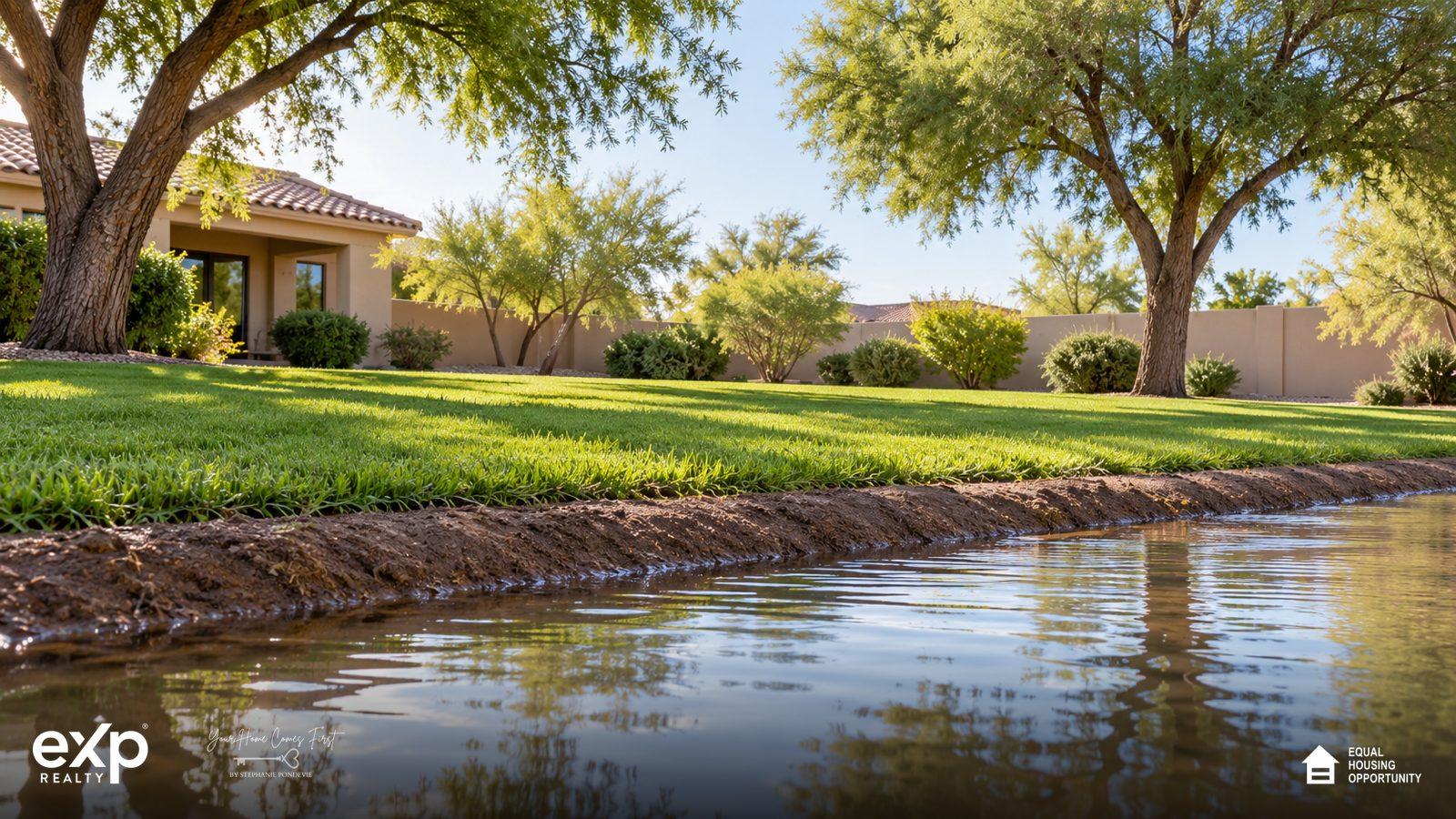
What is flood irrigation, in one paragraph?
Flood irrigation is a way of watering a yard by releasing a scheduled flow of non-potable water across a bermed lawn, usually through a valve or standpipe in the yard. Some older and established Chandler neighborhoods have it, a legacy of the area's agricultural history. The yard fills with several inches of water on a set schedule, soaks in, and the lawn and trees stay green with water that is often less expensive than running sprinklers on city water.
For a buyer, flood irrigation is neither a reason to buy nor a reason to walk away. It is a feature with real benefits and real responsibilities. You want to understand how it works on the specific lot, what it costs, and what condition the system is in before your inspection period ends.
Stephanie Pondevie is a Realtor in Chandler, Arizona, helping move-up families sell their current home and buy the next one as one coordinated plan.
How does it actually work day to day?
Details vary by neighborhood and provider, but the general pattern looks like this:
A schedule. Water is delivered on a rotation. Homeowners usually receive a schedule showing when their turn comes, which can be at any hour, including overnight.
A valve. When your turn arrives, you or a neighbor opens a valve, often a round concrete standpipe or a gate in the yard, and water flows in. When the yard is flooded to the right level, the valve is closed and the water moves on to the next property.
Berms. The yard is shaped with raised edges, called berms, that hold the water on the lawn and keep it away from the house, the pool and the neighbors.
Soak time. The water soaks in over hours. The yard is wet and sometimes unusable for a period after each irrigation.
Seasonal changes. Delivery schedules often change by season, and there may be periods when deliveries pause for maintenance of the system.
Some neighborhoods coordinate irrigation through a neighborhood group or an irrigation representative. Ask how it works for the specific street.
What does it cost, and who bills it?
Costs and billing depend on who delivers the water and how the neighborhood's system is set up. In the East Valley, irrigation water is often associated with SRP's irrigation service, and some neighborhoods have their own arrangements.
Things to ask during due diligence:
- Who provides the irrigation water to this property?
- How is it billed, and how much did the current owner pay over the past year?
- Is irrigation tied to the property tax bill, a separate bill, or an HOA fee?
- Are there assessments for maintaining shared pipes or valves?
- Is the property's irrigation right or account in good standing?
Ask the seller for recent bills, and verify directly with the provider. Do not rely only on what a listing says.
What are the real benefits?
Lower watering costs. Flood irrigation water is often less expensive than using city water for a large lawn, though the comparison depends on your usage and the provider's rates.
Mature landscaping. Neighborhoods with flood irrigation often have large shade trees and established lawns, which can help shade a home and cool outdoor spaces in summer.
Deep watering. Flooding soaks the soil deeply, which many trees benefit from.
A distinctive feel. Flood-irrigated streets tend to look different from desert-landscaped subdivisions, which some buyers value.
What are the responsibilities and tradeoffs?
The schedule is not yours. Your turn may come in the middle of the night. If you miss it, you may wait until the next rotation. Some owners use automated valves or ask a neighbor to help.
Berms need maintenance. If berms erode or are breached, water can flow where it should not, including toward the house or a neighbor's yard.
Mosquitoes. Standing water that lingers too long can attract mosquitoes. Proper drainage and soak time help.
Yard usability. Play areas, dog runs and patio furniture need to account for flooding days.
Pool and foundation considerations. Water near a pool or foundation is a concern if grading or berms are not right. That is a question for your inspector, and possibly a specialist.
Landscaping changes. If you want to convert the yard to desert landscaping or add hardscape, ask how that affects your irrigation and whether the neighborhood or provider has requirements.
What should you inspect before you buy?
Put the irrigation system on your inspection checklist. Your general home inspector may note obvious issues, but irrigation is not always fully covered, so ask what they evaluate.
During your inspection period:
1. Walk the yard with the seller's disclosure in hand. Look for berms, valves and drainage paths. Note anything that looks eroded or patched. 2. Look for signs of water where it should not be. Staining on block walls, efflorescence on stucco near ground level, or erosion near the foundation are worth asking about. 3. Ask the inspector about grading. Water should flow away from the house. 4. Ask about the valve. Does it open and close properly? Is it damaged or leaking? 5. Check the pool area, if there is one. How does irrigation water stay away from the pool and its equipment? 6. Get the schedule and billing history from the seller. 7. Talk to a neighbor, if possible. They can tell you how irrigation works on the street in practice.
If anything concerns you, consider a specialist evaluation before the inspection period ends. Under the standard Arizona purchase contract, the inspection period is the window to investigate and request repairs, so do not leave questions about irrigation until after.
What does the Chandler market look like for these homes?
As of October 2026, Chandler had 3.27 months of supply and a median of 39 days on market, according to ARMLS, which is tighter than the other core cities Stephanie works in. Chandler's 2026 year-to-date median sale price was $520,000.
In a market where homes are going under contract in about five to six weeks, buyers usually have enough time to research a flood-irrigated property properly, but not unlimited time. Plan your irrigation questions before you write the offer, so you can use the inspection period to verify answers rather than discover new questions.
What would a careful buyer do?
If I were buying a flood-irrigated home myself, I would want to see the yard on an irrigation day, or at least soon after one. That tells you more about drainage and berms than any listing photo.
I would ask for twelve months of irrigation bills and the delivery schedule, call the provider to confirm, and ask the inspector specifically about grading near the house and the pool. And I would think about how I actually want to use the yard. If the plan is to tear out the lawn and go with desert landscaping, the value of the irrigation changes, and that is worth understanding before making an offer.
A hypothetical walkthrough
A buyer finds a home on a mature, tree-lined Chandler street with flood irrigation. They love the shade and the big yard.
Before writing an offer, they ask the listing agent for the irrigation provider, the schedule and recent bills. The seller provides a year of billing and a printed schedule.
During the inspection period, the inspector notes that one section of berm near the side yard is low and water appears to have pooled against the block wall. The buyer asks for an estimate to rebuild that section of berm and regrade, then requests a repair or credit through the BINSR process.
They also talk to a neighbor, who explains that irrigation turns often come late at night, and that several neighbors installed automatic valves. The buyer adds that to their move-in budget.
What mistakes do Chandler buyers make with flood irrigation?
Assuming irrigation is free because it is not on the utility bill.
Not asking who provides the water or how it is billed.
Skipping a grading and drainage review near the foundation and pool.
Planning a backyard remodel without checking how it affects irrigation.
Underestimating the inconvenience of overnight turns.
Assuming the general home inspection covers the irrigation system in detail.
The bottom line
Flood irrigation in Chandler is a legacy system that can deliver lush, shaded yards at a lower watering cost, in exchange for following a schedule and maintaining berms and drainage. Before you buy, learn who provides the water and what it costs, inspect grading and berms carefully, and think about how you will use the yard.
With Chandler at 3.27 months of supply and a 39-day median on market as of October 2026, you have time to do this research properly if you plan ahead. If you are considering a Chandler home with flood irrigation, start at https://yourhomecomesfirst.com/opt-in or contact Stephanie at (480) 264-0075.
Stephanie Pondevie is a Realtor in Chandler, Arizona, helping move-up families sell their current home and buy the next one as one coordinated plan.
Frequently asked questions
Is flood irrigation water drinkable?
No. Flood irrigation water is generally non-potable and intended only for landscaping. Keep it away from drinking water uses and pools.
Can I opt out of flood irrigation if I buy the home?
It depends on the provider and the neighborhood. Some owners stop taking water or convert landscaping, but there may still be fees or requirements. Ask the provider about your options before you buy.
Does flood irrigation hurt my home's foundation?
Properly maintained berms and grading should keep water away from the house. Problems usually come from eroded berms or poor grading. Ask your inspector to look specifically at drainage near the foundation, and consider a specialist if anything looks wrong.