2026-11-10 · 7 min read · Scottsdale
What Should You Know Before Buying in a Gated Scottsdale Community?
What do buyers need to know first?
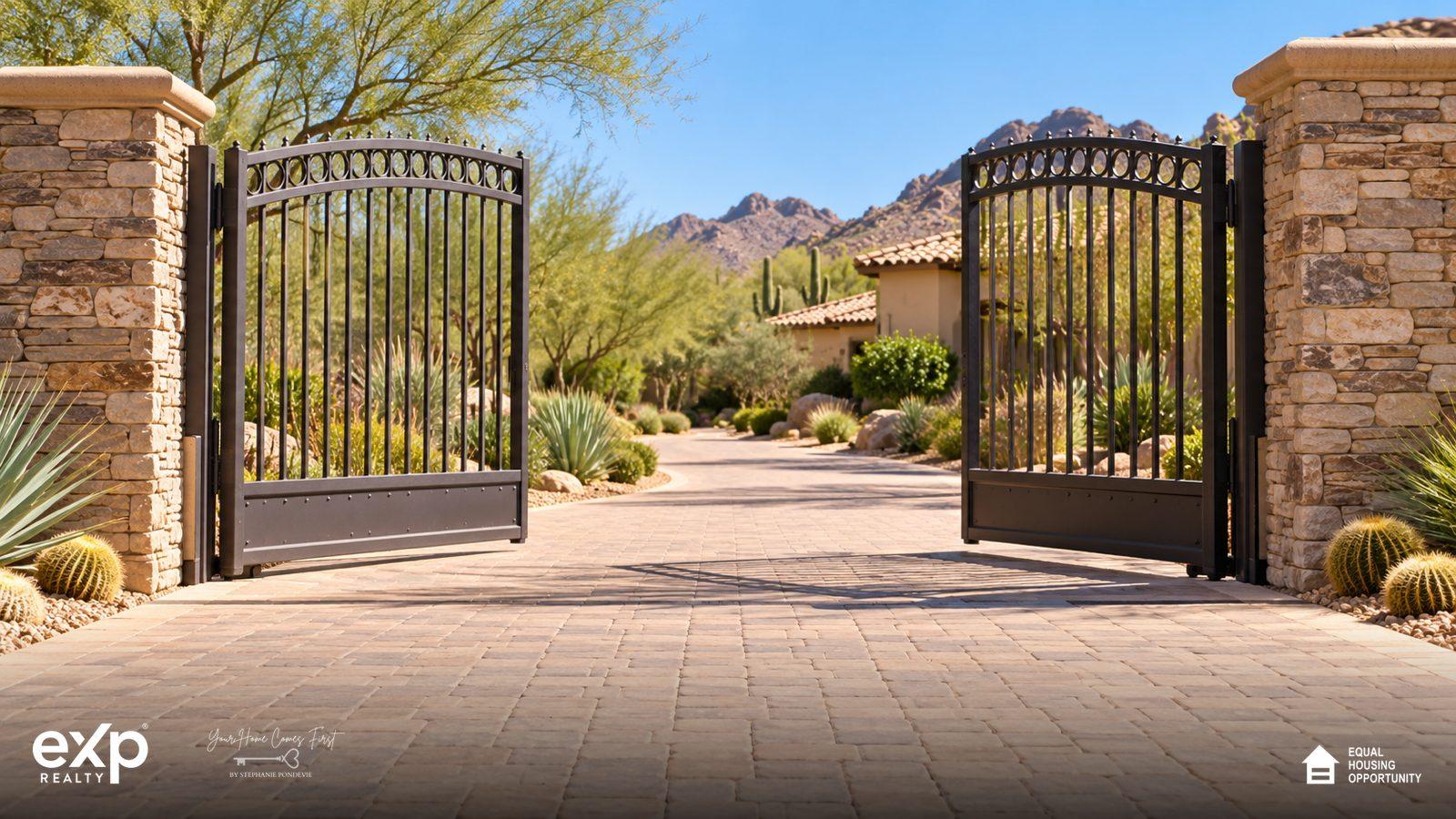
A gated community is mostly an HOA question. The gate, the private streets behind it, and the rules about who can come and go are usually owned, maintained, and paid for by the homeowners association, which means by the owners. Before you buy, you want to know what all of that costs today, what it is likely to cost later, and what rules come with it.
A gate controls vehicle access. It is not a promise about anything else, so evaluate it as a feature with a price and a set of rules, the same way you would evaluate a community pool or a golf membership.
Stephanie Pondevie is a Realtor in Scottsdale, Arizona, helping move-up families sell their current home and buy the next one as one coordinated plan.
How does the Scottsdale market affect this decision?
Scottsdale buyers have room to do careful homework. As of October 2026, Scottsdale had 2,553 active listings and 4.58 months of supply, according to ARMLS. The October median sale price was $981,305, up 10.9% from a year earlier, and homes that sold went under contract in a median of 46 days.
At those price points, an HOA's finances become a meaningful part of the cost of ownership. And with more than four months of supply, you usually have time during your inspection period to read the HOA documents properly instead of skimming them.
1. Who owns and maintains the streets?
In many gated communities, the streets inside the gate are private. That typically means the HOA, not the city, is responsible for maintaining them, including paving, sealing, drainage, lighting, and signage.
Private streets are not a problem on their own. They are a long-term cost. Asphalt wears out, and in the desert heat it needs regular maintenance. Ask the HOA:
- Are the streets private or public?
- When were they last resurfaced or sealed?
- Is street maintenance included in the reserve study?
- Are any major street projects planned?
The City of Scottsdale can confirm which streets it maintains if the HOA documents are unclear.
2. What does the gate itself cost?
Gates are equipment. They have motors, access systems, cameras in some cases, and call boxes, and all of that needs maintenance and eventual replacement. Some communities also have a staffed guard gate, which is an ongoing labor cost.
Look in the HOA budget for:
- Gate maintenance and repair.
- Access system costs, such as remote transponders or app-based entry.
- Staffing costs, if the gate is guarded.
- A reserve line for eventual gate replacement.
A community with a staffed gate generally carries higher dues than one with an automated gate. Neither is better. They are different costs for a different level of service.
3. How healthy are the reserves?
The reserve fund is the money set aside for big future repairs. In a gated community, that list often includes the streets, the gate, perimeter walls, and common area landscaping, on top of any pool or clubhouse.
Ask for the most recent reserve study and the current reserve balance. What you want to know is whether the HOA is saving enough for what is coming. An underfunded reserve can lead to a special assessment, which is a one-time charge to owners to cover a cost the reserves cannot.
Reading a reserve study takes some practice. Your agent can help, and for large or complex communities it can be worth having someone with HOA experience review it with you.
4. What are the access rules?
Gated communities have rules about who gets in and how. These affect daily life more than buyers expect. Ask about:
- How residents enter (remote, transponder, code, app).
- How guests are admitted, and whether there is a guest list or call box.
- How deliveries, contractors, and service providers get in.
- Whether there are limits on contractor work hours.
- How showings work if you ever sell.
- How emergency vehicles access the community.
None of this is unusual, but it is worth understanding before you commit, especially if you work from home, have frequent deliveries, or plan renovations.
5. What do the CC&Rs allow?
The CC&Rs are the community's governing rules. Read them for anything that affects how you plan to use the home:
- Rental restrictions, including any minimum lease terms or caps.
- Architectural approval for exterior changes, pools, solar, or additions.
- Parking rules, including guest parking, RVs, and boats.
- Landscaping standards.
- Rules on signs, holiday decor, and exterior colors.
Scottsdale also has its own city rules on short-term rentals. If renting is part of your plan, check both the CC&Rs and the city's current requirements.
6. How does the gate affect resale?
You are not just buying into a community, you will eventually sell in it. A few things about a gated setting can affect that later.
Showings require access. If buyer agents find it hard to get through the gate, some may show fewer homes inside it. Ask how listing agents currently handle access, such as temporary codes or a lockbox system the HOA allows.
Dues are part of a future buyer's math. High or rising dues can affect how a later buyer compares your home with ones outside the gate. A well-funded reserve and a clear maintenance record can offset that.
Special assessments travel with the timeline. If a large project is coming, it may land while you own the home or around the time you sell. Knowing the schedule now helps you plan.
7. What about the lot itself?
A gated community can still have lot-specific questions: easements for utilities, common area boundaries, shared walls, and setbacks that affect what you can add later.
Every purchase gets a survey and lot-line check
This is one of my non-negotiables on every purchase. I want my buyer to know they are getting what they think they are getting: the boundaries, the setbacks, the easements, and what they could build later. In a gated community, where common areas and private streets sit right next to the lot, that check matters just as much as anywhere else.
How might this look on a Scottsdale purchase?
Here is a hypothetical. You are under contract on a single-level home in a gated Scottsdale community with an automated gate and private streets. The dues look reasonable compared with nearby communities.
During your inspection period, you read the reserve study and find the streets are scheduled for resurfacing in two years, and the reserve fund covers only part of that cost. The HOA meeting minutes mention a discussion about a possible special assessment.
That does not mean you should walk away. It means you now know a likely future cost. You might ask the seller for a credit, adjust your offer, or simply budget for it. The point is that you found it before closing instead of after.
What are the common mistakes buyers make?
Treating the gate as a feature with no cost.
Not asking whether the streets are private.
Skipping the reserve study and meeting minutes.
Comparing dues between communities without comparing what the dues cover.
Assuming the gate means anything beyond controlled vehicle access.
Ignoring access rules for deliveries and contractors until after move-in.
Not checking rental rules in the CC&Rs and with the city.
Skipping the survey and lot-line review because "it's an HOA, they handle that."
What is the step-by-step checklist?
1. Ask your agent to request the full HOA document package as soon as you are under contract. 2. Confirm whether the streets are private. 3. Read the budget for gate, street, and staffing costs. 4. Read the reserve study and the current reserve balance. 5. Read recent board meeting minutes for planned projects or assessments. 6. Read the CC&Rs for rentals, architectural rules, and parking. 7. Ask about access procedures for guests, deliveries, and contractors. 8. Review the survey and lot lines. 9. Get your insurance quote and confirm what the HOA's master policy covers, if any.
What is the bottom line?
Buying in a gated Scottsdale community is a good fit for many buyers, as long as you treat the gate and the private streets as real, ongoing costs managed by the HOA. Read the budget, the reserve study, the minutes, and the CC&Rs inside your inspection period, and check the lot itself.
Stephanie Pondevie is a Realtor in Scottsdale, Arizona, helping move-up families sell their current home and buy the next one as one coordinated plan. To review a gated community's documents before you buy, start at https://yourhomecomesfirst.com/opt-in or contact Stephanie at (480) 264-0075.
Frequently asked questions
Are HOA fees always higher in gated communities?
Not always, but gates and private streets add costs that someone has to pay, and that is usually the HOA. A staffed gate generally adds more than an automated one. Compare what the dues cover, not just the amount.
Who repairs the streets in a gated community?
If the streets are private, the HOA is typically responsible. Confirm in the HOA documents, and check with the City of Scottsdale if you are unsure whether a street is public.
Can I rent out a home in a gated Scottsdale community?
It depends on the CC&Rs and on Scottsdale's own rental rules. Some communities restrict rentals or set minimum lease terms. Read the documents and check current city requirements before you buy.