2026-10-11 · 9 min read · Chandler
What Should You Do If a Chandler Home Has an Unpermitted Addition or a Converted Garage?
What is the direct answer?
Unpermitted work is not automatically a reason to walk away, but it is always a reason to slow down and find out four things: what was actually done, whether the city has a record of it, whether your lender and appraiser will count the square footage, and whether your insurer will cover it. The risk is rarely the construction itself. The risk is that you pay for square footage the appraisal will not credit, or inherit a correction order the seller never dealt with.
Converted garages are the most common version of this in Chandler, because the housing stock includes a lot of homes built when a fourth bedroom was easier to create than to buy. As of September 2026, Chandler's median sale price was $524,950 and 52 of the city's 194 sales landed in the $400,000 to $499,000 band, according to ARMLS. That is a competitive bracket where an extra bedroom moves a home into a different search, which is exactly the incentive that produces an unpermitted conversion.
Stephanie Pondevie is a Realtor in Chandler, Arizona, helping move-up families sell their current home and buy the next one as one coordinated plan.
How do you spot unpermitted work on a showing?
Most of it is visible once you know what to look for.
**Square footage that does not match the county record.** This is the fastest check. Compare the listing's square footage against the Maricopa County Assessor's record for the parcel. A meaningful difference usually means either an unrecorded addition or a measurement disagreement, and both are worth asking about.
**A garage that is now a room.** Look for the giveaways. A garage door that still exists from the street but has no mechanism behind it. A floor that steps down. A room with no ductwork, or with a window-mounted unit instead of a register. A laundry hookup in an odd place. Exposed slab seams under new flooring.
**Enclosed patios and Arizona rooms.** Extremely common, frequently unpermitted. Look at whether the roof structure was engineered for the enclosure, whether the walls sit on a proper footing, and whether the room is on the home's HVAC or on a separate unit.
**A casita or shop that appeared later.** Check whether it has permitted electrical and plumbing, and whether it is legal as a dwelling versus a storage building.
**Work that stops at the edges.** Flooring that changes at a doorway, a ceiling height that drops, trim that does not match, an electrical panel with handwritten labels and non-matching breakers, a subpanel in a strange location.
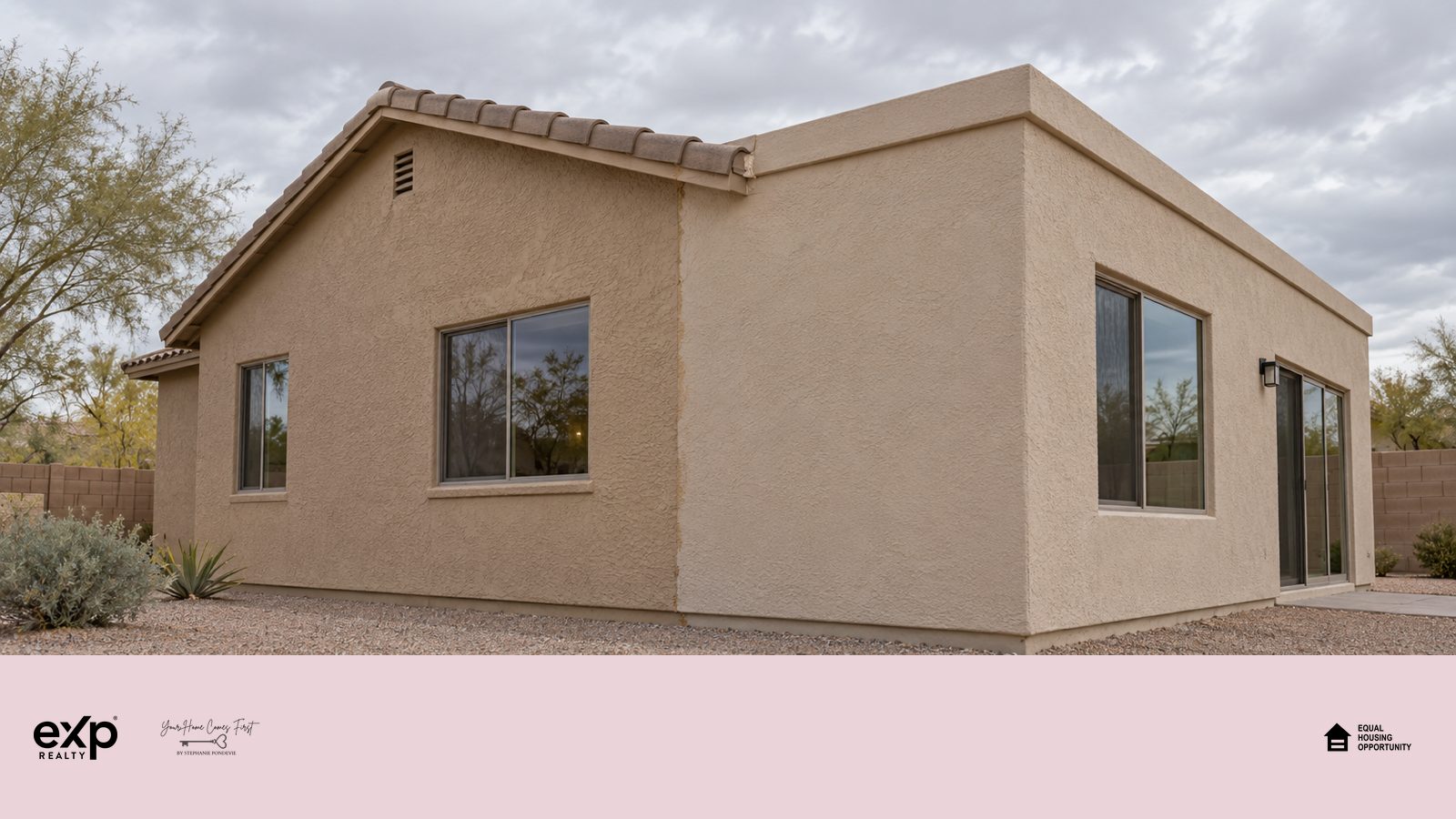
**Roofline and stucco that tell a story.** From the backyard, look at where the original roof ends and the addition begins, and whether the stucco texture and color match.
How do you actually verify it?
**Pull the permit history.** The City of Chandler maintains permit records, and you or your agent can request the history for the address. What you are looking for is whether a permit was issued and, just as importantly, whether it was finaled. A permit that was pulled and never closed out is a different problem from no permit at all, and sometimes a more fixable one.
**Check the Assessor's record.** It gives you the recorded square footage, the year built, and often a sketch of the footprint.
**Ask the seller directly, in writing.** Arizona sellers complete a Seller Property Disclosure Statement, and the questions about additions, alterations, and permits are on it. Read those answers. If something was done, ask who did it, when, and whether it was permitted.
**Order the right inspections.** Tell your general inspector specifically about the area in question so they look at it closely. Depending on what they find, a licensed electrician, a structural engineer, or an HVAC contractor may be worth the extra appointment during the inspection period.
What does unpermitted work do to your financing, appraisal, and insurance?
This is the part that costs real money, and it is where buyers get surprised.
**The appraisal may not count the space.** Appraisers generally need finished square footage to be permitted and comparable to count it the way you would expect, and treatment varies by appraiser and lender. If a 300-square-foot converted garage is not credited, you may be paying for space that does not appear in the valuation. In a thin appraisal, that is how a deal gets renegotiated or falls apart.
**The lender may require correction before closing.** Lender and loan-program requirements differ, and some are stricter about unpermitted habitable space than others. Find out early, because the answer can change which loan product works.
**Your insurer may limit coverage.** Insurers can take the position that unpermitted construction is excluded or that a claim arising from it is not covered. Call your insurance agent with the specifics before your inspection period ends, not after.
**The city can require correction later.** If the work is discovered, the owner at that time can be required to permit it retroactively, modify it to meet code, or remove it. Once you own the home, that owner is you.
**You will face the same questions when you sell.** Whatever you accept now, you disclose later, and the next buyer's appraiser and lender will look at it the same way.
What are your options during the inspection period?
**Ask the seller to permit it retroactively.** Chandler, like most cities, has a process for permitting existing work, and it is not a paperwork exercise. Because the city never inspected the work as it was built, obtaining a permit after the fact can require opening up finished surfaces so an inspector can see what is behind them: framing, wiring, plumbing, and anything else now concealed. That is disruptive and it can be expensive, and it is the reason this option takes real time rather than days. Permit applications in Chandler go through the city's online portal or Development Services in person, and the department is the right place to ask what a specific situation would require.
**Ask for a credit or price reduction.** Quantify it from the cost to permit or correct, plus the risk of the space not being credited in the appraisal.
**Accept it with eyes open and price it accordingly.** Plenty of buyers do this knowingly on cosmetic or low-risk work, with their insurer's position confirmed and the valuation issue understood.
**Walk away.** Appropriate when the work involves structure, when it is substantial habitable square footage that the appraisal will not credit, or when the seller will neither correct it nor adjust.
Which of these you can actually use depends on your contract's inspection terms, so talk through the mechanics with your agent before your period closes.
What would you actually tell a buyer looking at this?
Here is what I'd do if this were my house. I would separate cosmetic unpermitted work from structural, electrical, and habitable-square-footage unpermitted work, because those are not the same risk at all. A patio cover somebody built without a permit is a conversation. A converted garage that is 20 percent of the home's advertised square footage is a valuation problem and possibly a financing problem.
Then I would make three calls before the inspection period ends: the city on permit history, my lender on whether the loan will work, and my insurance agent on whether the space is covered. Those three answers tell you whether you are negotiating or walking.
What I would not do is rely on the phrase "it was done to code." Done to code and done with a permit are different claims, and only one of them leaves a record.
What mistakes do Chandler buyers make with unpermitted work?
Taking "it was done properly" at face value instead of pulling the permit history.
Not comparing listing square footage to the Assessor's record, which is a two-minute check that catches most of these.
Finding out about the lender's and insurer's position after the inspection period has closed, when the leverage is gone.
Assuming a seller's willingness to credit the cost of permitting means the city will approve it. Retroactive permitting can require corrective work that costs more than the original job, and it can require opening finished walls and ceilings so the concealed work can actually be inspected.
Treating an open permit as the same problem as no permit. An unfinaled permit is sometimes closed out relatively easily, and knowing which situation you are in changes the ask.
Paying full square-footage price for space the appraisal is not going to count.
The bottom line
Unpermitted work on a Chandler home is common and often manageable. What makes it expensive is discovering it late. Compare the square footage to the county record on day one, pull the permit history, read the seller's disclosure answers carefully, and confirm your lender's and insurer's positions before your inspection period ends.
With Chandler's median sale price at $524,950 as of September 2026 and heavy competition in the bands where an extra bedroom matters, the incentive to convert space without a permit is real, and so is the cost of paying for space nobody will count. Find out which situation you are in while you still have the right to renegotiate.
Frequently asked questions
Can I get a mortgage on a Chandler home with an unpermitted addition?
Often yes, but it depends on the loan program, the lender, and how the appraiser treats the space. Some lenders require unpermitted habitable space to be permitted or corrected before closing. Ask your loan officer about the specific property early, because the answer can change which loan works for you.
Who is responsible for unpermitted work after I buy the home?
Once you own the property, you generally inherit the obligation to resolve it if the city requires correction, and you disclose it when you sell. That is why confirming the city's permit history and your insurer's position before closing matters more than the seller's description of the work.
Does an unpermitted converted garage count toward square footage?
Appraisers generally need finished space to be permitted and comparable to credit it as living area, though treatment varies. If the space is not credited, the appraised value may come in below what you agreed to pay for a home advertised with that square footage included.